
An “infovore” shares his chats
How Tyler Cowen uses ChatGPT in his mission to become an information trillionaire

Every week, we talk with ChatGPT Pro subscribers to learn how they’re using the product in their lives and work. Today, we want you to meet polymath Tyler Cowen, who uses ChatGPT to pursue his endless curiosity. We hope his story sparks ideas for how you can use AI in your own work.
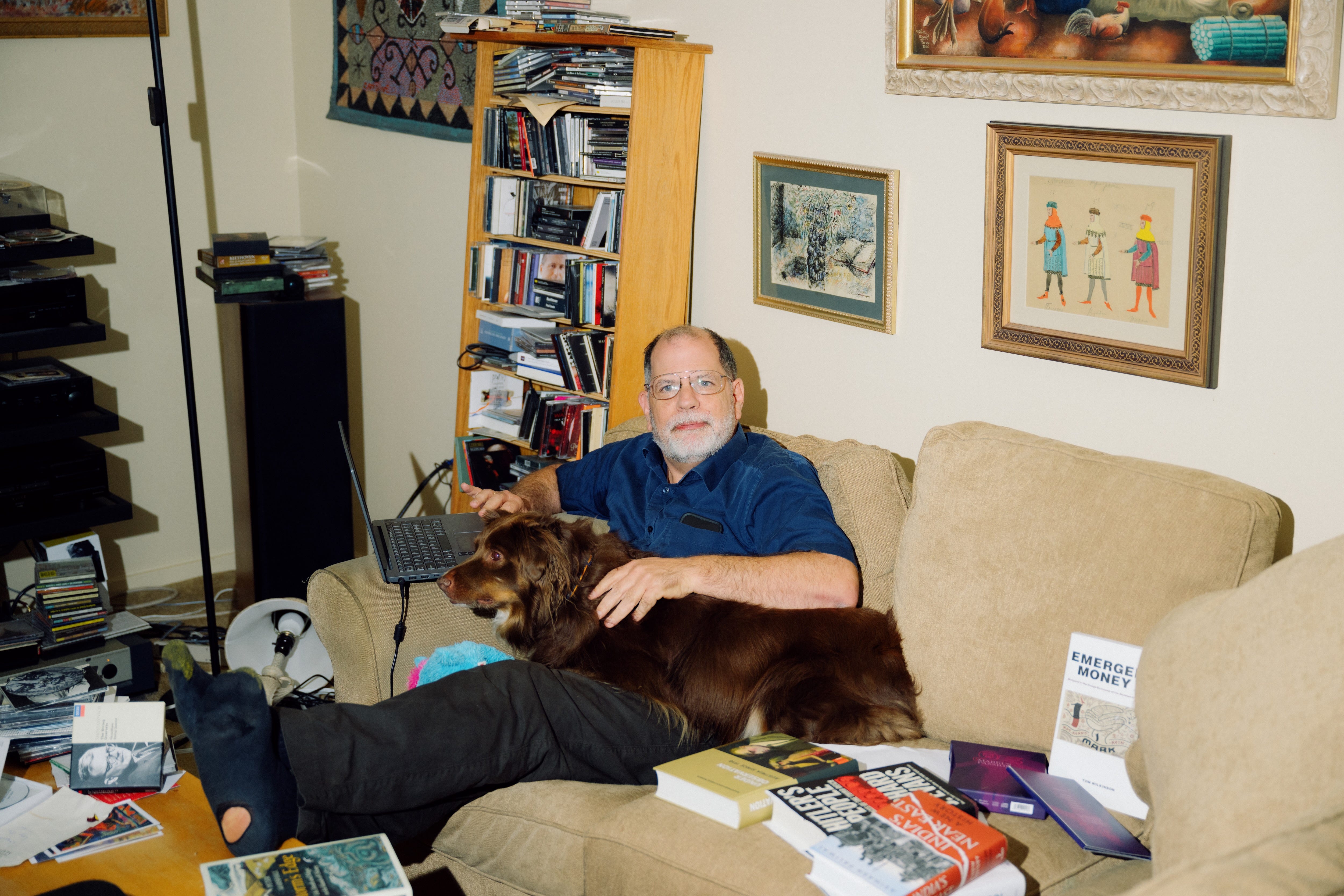
Tyler Cowen is hard to describe in a single word. He is an economist, a professor, a writer, a podcaster, an art collector, a food lover, and a world traveler. But the word he prefers is “infovore.”
Across nearly 20 books, daily writing on his website Marginal Revolution, hundreds of interviews on his podcast, Conversations with Tyler, and decades of teaching economics at George Mason University, Tyler has built a career around trying to make sense of how the world works. “I aspire to be an information trillionaire,” he says. “I feel I’m already an information billionaire, but one should always shoot higher.”
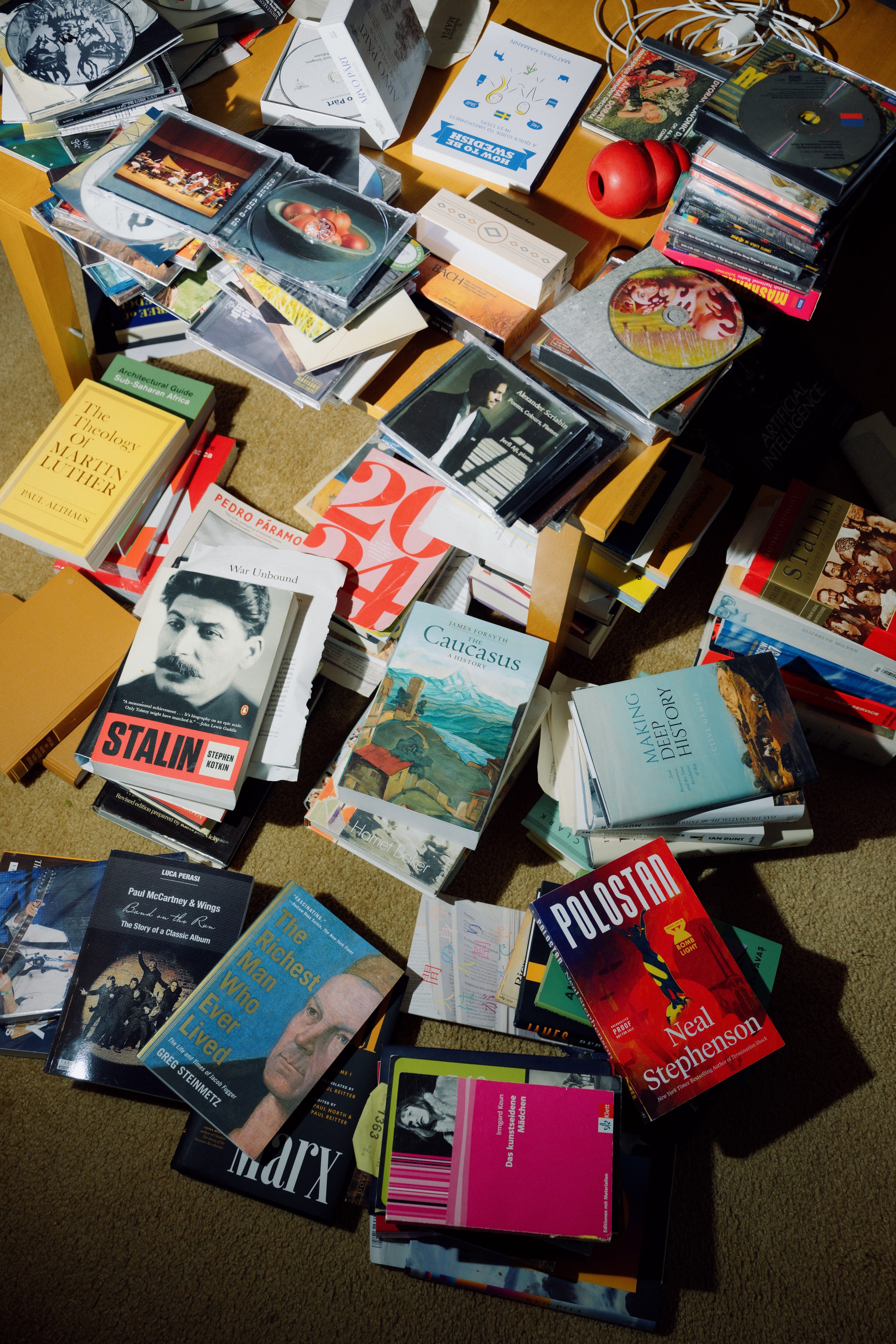
“The world is so interesting and so rich and so open-ended that the more you learn, the more you want to keep on going,” he adds. That curiosity shows up in almost everything he does: he reads two to three books a day, writes daily, has documented thousands of restaurants he’s visited since 2006, and has traveled to roughly 105 countries, including 33 trips to Mexico, seven to Brazil, and time living in Europe and New Zealand.
To Tyler, these are not separate pursuits. They are all ways of “cracking cultural codes” — understanding the art, music, food, institutions, incentives, histories, and habits that shape how people live. And in his words, “AI tools of all sorts are literally the best things humans have ever invented to help you do that.”
His interest in AI began long before ChatGPT, when he saw the chess computer Belle wheeled into a tournament in the ’70s. At the time, he was skeptical about the future of artificial intelligence. But as a former chess champion himself, Tyler followed the progress of AI in chess closely. The Kasparov–Deep Blue matches in particular helped convince him that AI could not only calculate; it could be intuitive and creative too.
He now describes ChatGPT Pro as approaching “the pocket-calculator level” of reliability for many of the ways he uses it. And because he has written online for more than 20 years and recorded years’ worth of public podcast conversations, he says, “I think the AIs know me better than almost any other human being on earth.”
“I have so many questions in life, and now I have a new entity to ask! Here are [10] salvos I lobbed in the direction of ChatGPT Pro.”
1. Critique a macroeconomic model
Attached is a famous 1978 macroeconomics paper by Robert J. Barro on unanticipated money shocks and their effects. Please write a detailed critique of it, bringing all the economic and econometric expertise you can bring to bear on the matter.
[Paper.pdf]
Why was this chat valuable? “The critique helped me see why I should not believe the paper’s main result at all. Chalk that up to progress!”
2. Understand a complex topic
Which are some good pieces to read to understand how baseball coaches and trainers have produced so many more pitchers who can throw at ultra-fast speeds, say 98-100 miles per hour or possibly more?
Why was this chat valuable? “Sometimes AI models are simply a highly efficient way to replace web search. My quantity of searches has gone way down.”

3. Build a travel itinerary
I want to do a trip in northern Ghana. There is an arts center called Tamale and also a very famous mosque in northern Ghana, and some large mammals to see. Is there a five-day itinerary where this all works out? What do those travel arrangements look like, and how do I get from one place to another?
Why was this chat valuable? “This is what we did, and it was wonderful.”
4. Learn about a city based on local news
What is the safety level like in Sao Paulo near Hotel Unique in Jardim Paulista? Can I walk around there? What about at night? Check reports from local media sources.
Why was this chat valuable? “Asking the model to check local media is a useful tweak for many kinds of requests.”
5. Refine your artistic eye
How would you explain the difference between a “pretty good” Mondrian abstract painting and a great one?
Why was this chat valuable? “I thought the Pro model aced a very tough question.”
6. Learn what to look for in an art museum
I’m visiting the Detroit Institute of Arts. Which pictures in particular should I be looking for, and what is some useful context for viewing them?
Why was this chat valuable? “After two visits in three days, I would second the advice I got from this chat.”

7. Analyze a chess game
Can you find a short chess game online where one of the players lost within fifteen moves and analyze where the loser went wrong?
Why was this chat valuable? “Many fun chats are not at all useful; they are simply ways to convince yourself that modern technology truly is amazing, and to relive that sense of wonder.”
8. Get an art appraisal
Please give a sophisticated artistic analysis of why the art market values early David Burliuk paintings much more highly than his later work.
Why was this chat valuable? “I know this market well, and the answer is spot-on.”

9. Find concerts you might like
I’ll be in Paris June 27 thru July 2. What are the concerts that Tyler Cowen might want to see? Classical, jazz, world music, and others. Feel free to be eclectic.
Why was this chat valuable? “I bought tickets for two of these, classical music and Algerian rai.”
10. Learn how to listen to a symphony
I want to listen to Sibelius’s Symphony No. 7, a somewhat difficult work. What should I be listening for? Assume some musical sophistication, but I am not a music professional. And which are some recommended recordings?
Why was this chat valuable? “I find the Pro model is especially strong for this kind of research.”
For more stories and use cases from experts using ChatGPT, subscribe.
Are you a Pro subscriber using ChatGPT to help you level up your work? We’d love to meet you.
If you doubt the 2-3 a day you haven’t been reading Margin Revolution for very long.
> he reads two to three books a day
The phrase sounds impressive but unfeasible unless we are taking about very short books.