

Every week, we talk with ChatGPT Pro subscribers to learn how they’re using the product in their personal and professional lives. Today, we want you to meet architectural designer Shotaro Tsuda at the renowned Japanese firm Kengo Kuma & Associates. He uses ChatGPT to research architectural traditions and iterate more quickly on designs. We hope his story sparks ideas for how you can use AI in your own work.

Shotaro Tsuda credits his father, who once dreamed of becoming an architect, with teaching him to see and appreciate design wherever he looked: a thoughtfully arranged bouquet, a welcoming courtyard, the austerity of Japanese minimalism.
This early aesthetic education led him to study architecture as an undergraduate. But like his father, Shotaro turned away from the field before making it his profession. Instead, he shifted his focus to science and technology, moving to New York to earn a master’s degree in statistics. What followed was an entrepreneurial but artistically unfulfilling decade in machine learning and data science for e-commerce. “It was like I was putting a lid on my creative brain,” Shotaro says.
When he lost a close friend in a motorcycle accident, Shotaro retreated to a Zen temple in rural Nagano. There, he began painting again, then experimenting with graphic design and animation. After a year at the temple, he decided to pursue art full-time.

Still, he kept one foot in tech. At a gallery opening in 2023, he encountered AI-generated imagery for the first time. Shotaro saw that AI might be able to synthesize the elements of his nonlinear path — his analytical training and creative instincts, his Japanese restraint and New York enterprising spirit, his reverence for tradition and appetite for new technology. After using ChatGPT to help a friend mock up designs for a “dream home” architecture competition, he realized those different threads no longer had to compete. They could weave together into a new way of practicing architecture.
Shotaro now uses AI to visualize and refine design concepts, helping him explore more options and get feedback faster, and to research design references and envision how different architectural influences might work together. He’s especially interested in blending yohaku, a Japanese concept centered on the beauty of empty space, with warmer touches that promote community and connection, such as plant life and natural light.
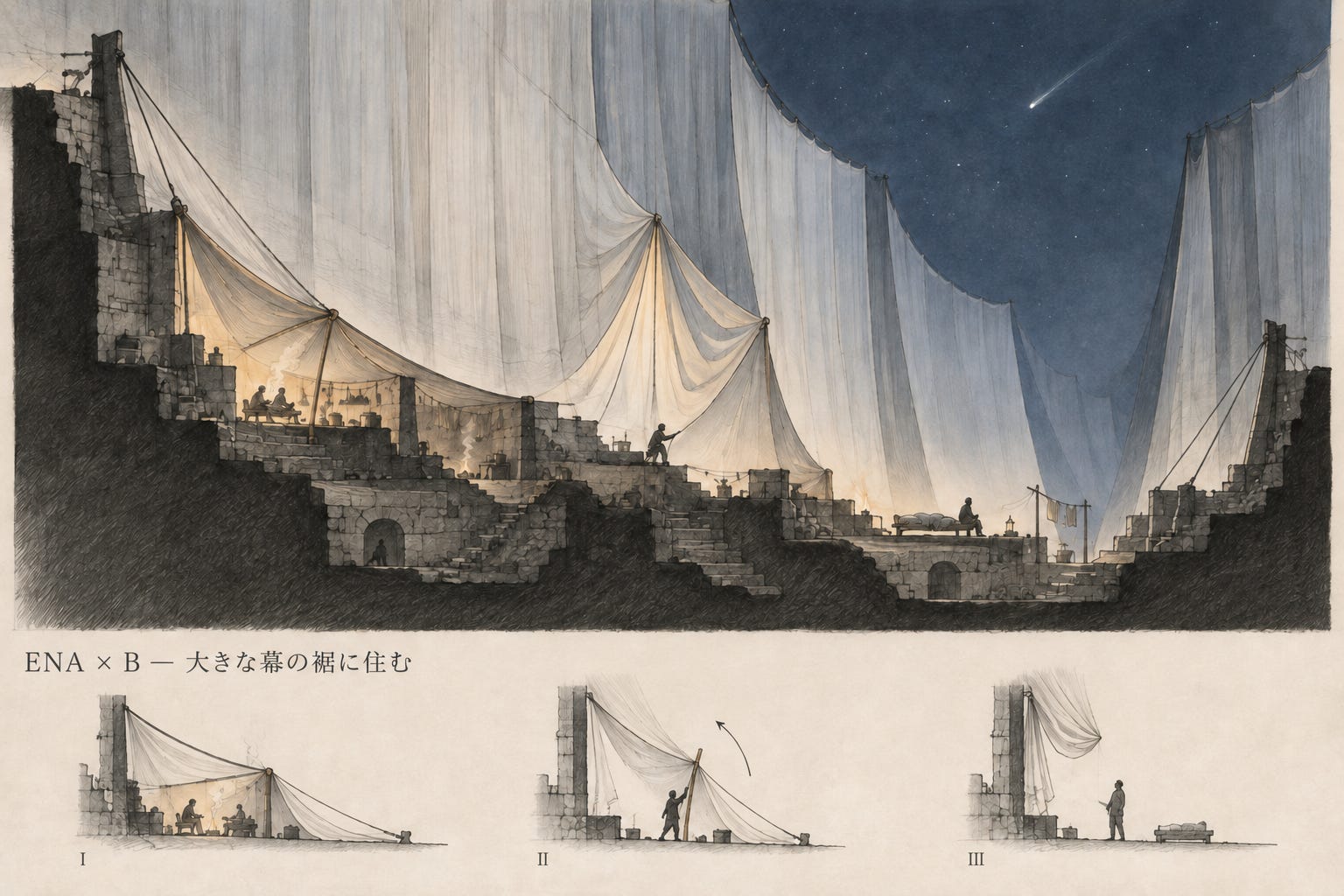
Today, Shotaro is an architectural designer at Kengo Kuma & Associates, a Japanese firm known for contemporary architecture that harmonizes traditional Japanese aesthetics, natural materials, and surrounding landscapes. Outside his day job, he is redesigning his parents’ backyard, giving his father’s preferred minimalist style a contemporary, climate-aware twist. “I call it tropical Japonesque,” he says.
Here are six ways Shotaro uses ChatGPT in his personal architectural practice (the prompts have been translated from Japanese):
1. Transform a hand-drawn sketch into a 3D rendering
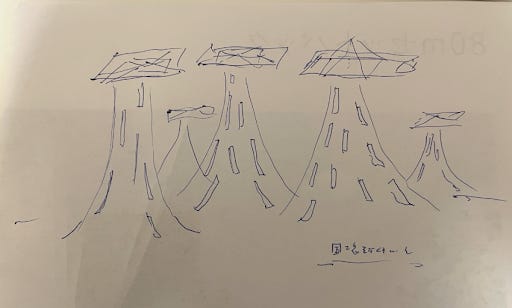
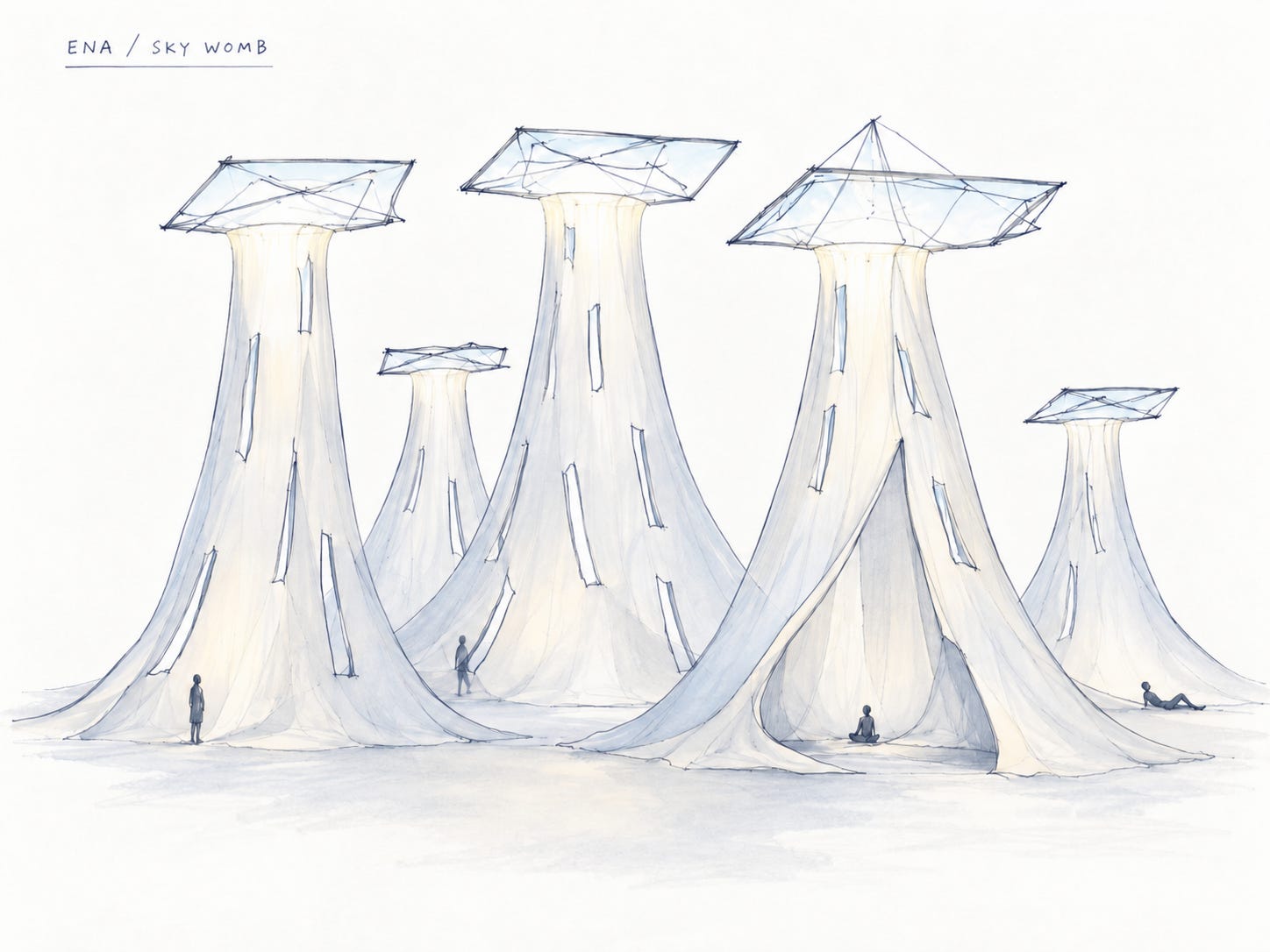
I’m competing in an architectural competition to design a ‘Sky House.’ Based on the following concept for my Sky House — “Humans long for the sky, and AI longs for the womb” — I want you to develop the attached hand-drawn sketch.
While creating an effect of light falling from the sky onto the ground, could you draw sectional sketches of “Sky / Womb” based on this sketch?
[Sketch.jpg]
Why was this chat valuable? “Rather than only discussing my visual concept in abstract terms, this allowed me to turn a rough hand-drawn sketch into more concrete architectural sections within minutes. By seeing what the AI chose to emphasize, reinterpret, or amplify, I could quickly judge whether the idea had real visual and spatial potential. It was especially valuable not as a way to generate a final design but as a fast design-study tool that helped me decide what to draw, test, and think about next.”
2. Gather and synthesize design references
I’m gathering staircase references for a California residential project. I want them to communicate a distinctly Californian soul but pull from different influences, like the stairs in the Louisiana museum in Denmark and the Heritance Kandalama hotel in Sri Lanka.
Are there any houses or museums in the Bay Area with interesting stairs that I should include in my reference list?
Why was this chat valuable? “I already had two staircase references I loved, but was struggling to connect those ideas to the California house I was designing. This conversation helped me bridge my personal taste with the local architectural context. The Ray Kappe Residence was a particularly interesting reference because of its timber joinery and distinctly Californian character. It gave me another direction to explore without simply copying a staircase I already admired. This exchange felt less like searching for images and more like bouncing ideas around with someone who understood what I was looking for.”
3. Iterate options for practical design problems
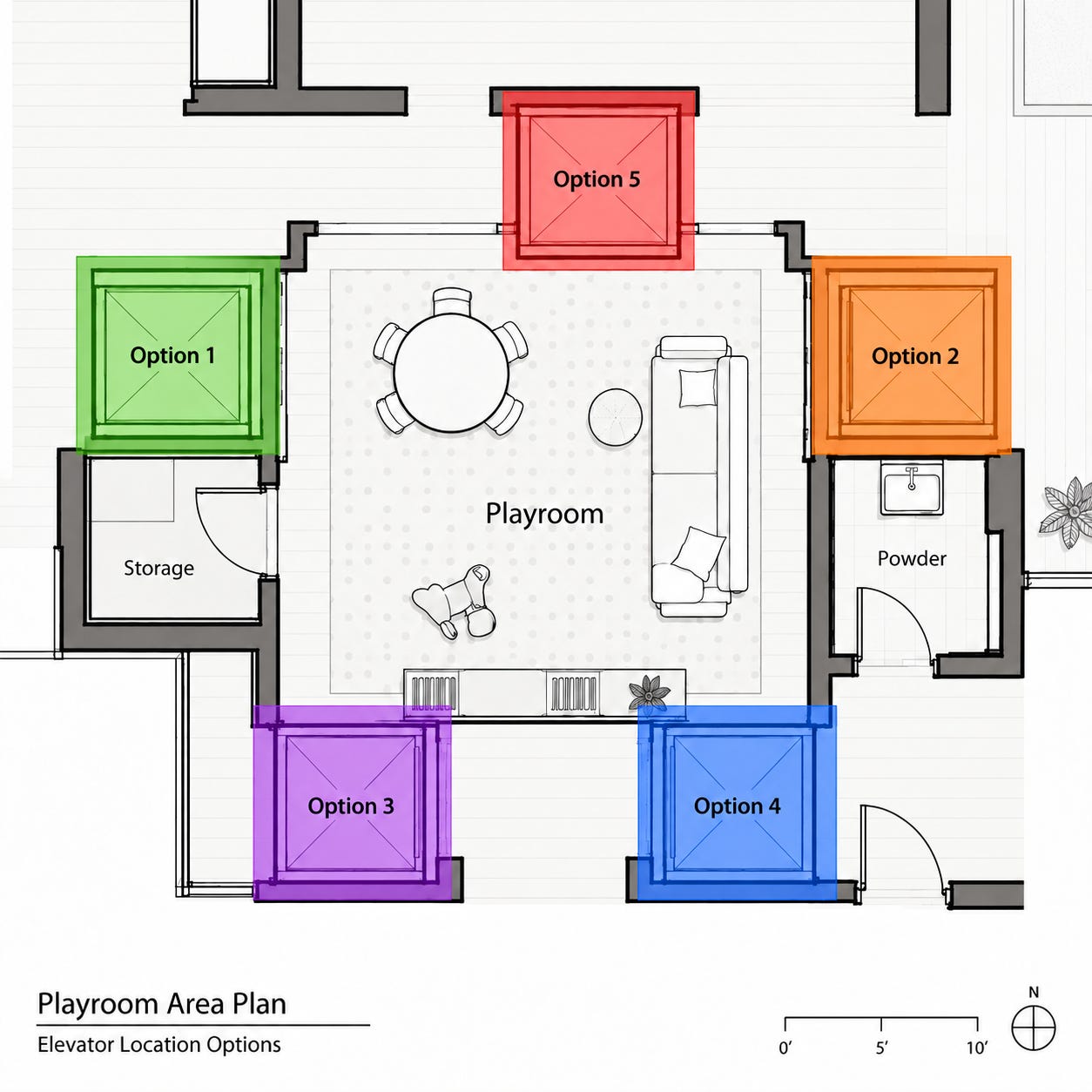
For the California residence, I’m not convinced by the current elevator location. In its current location, it doesn’t work well with the playroom on the second floor. Where are alternative locations where the elevator might work?
[Blueprint.jpg]
Why was this chat valuable? “I had just joined this residential project and needed to come up with some ideas by Wednesday. I wasn’t happy with the existing elevator location, but I wasn’t entirely sure where to start. Talking it through with ChatGPT helped me turn that vague feeling that something wasn’t right into a set of specific design questions. What I found especially useful was that it helped me organize my thoughts before jumping into the drawings. I wanted to bring my own proposal to the table, rather than just react to someone else’s design, and this gave me a clearer starting point.”
4. Visualize different design directions
Right now, our designs for the entrance and exits of the Tokyo pavilion include five gate-shaped frames, but that feels a bit heavy. I’m wondering if we could use the louvers in the glass frame to create the gate-shaped frames. Can you generate images of what that would look like?
Additionally, please gather reference images for the following:
Doors that use frames or louvers to support or decorate the glass.Very tall, narrow door frames. They don’t have to use glass.Other interesting door frames.
[CurrentDesigns.JPG]
Why was this chat valuable? “I was working on the design for the entrance to a pavilion in Tokyo and I wanted to explore whether the louvers supporting the glass could also become the entrance frames, but when I saw the generated images, none of them really felt right. So instead of continuing to generate more images, I asked ChatGPT to find architectural references that might help me rethink the design. That shift helped me clarify what I was looking for and gave me a more focused direction for the next design study. For me, the value of this exchange wasn’t necessarily in getting the perfect image from AI but from the back-and-forth conversation that helped me sharpen my own design judgment.”
5. Create visual assets
I want to make a stone floor texture based on this image. Can you help create it? It needs to be a 1080x1080-pixel image that can repeat seamlessly without visible edges.
[Stone.jpg]
Why was this chat valuable? “This was one of the most practical uses of ChatGPT in my architecture visualization workflow. It helped me move from visual reference to production-ready material assets.”
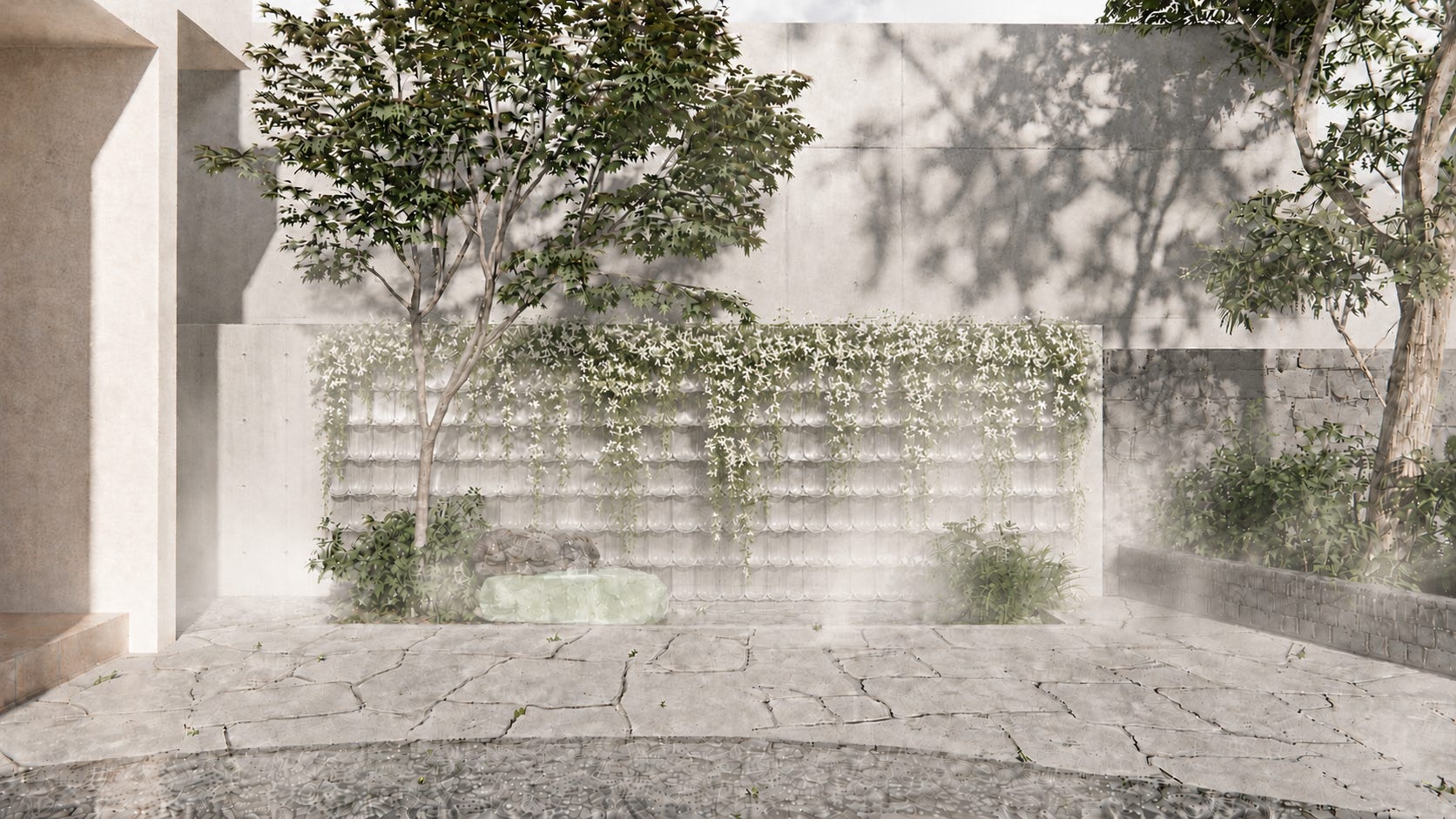
6. Reimagine Japanese garden design for a changing climate
For my parents’ backyard, I want to create a design genre called “Tropical Japonesque.” We’ll maintain the serenity and purity of traditional Japanese aesthetics, but temperatures are getting really high, so I want to introduce a bit of Sri Lankan architect Geoffrey Bawa into design components.
Based on these criteria, can you create images of a Tropical Japonesque garden, architecture, and chair?
Make sure to keep temperate-climate vegetation, which will introduce an interesting tension between the plants and the Bawa design aesthetic.
Why was this chat valuable? “ChatGPT helped me develop an entirely new design category for a changing climate that incorporates cultural memory, Japanese design principles, and tropical references. And it’s particularly fulfilling to design for my parents. My dad always wanted to be an architect himself, and I know it makes him happy to see me expressing myself this way.”
For more stories and use cases from experts using ChatGPT, subscribe.
Are you a Pro subscriber using ChatGPT to help you level up your work? We’d love to meet you.
The “Tropical Japonesque” idea really caught my attention. We’ve been thinking about whether hotter summers are starting to make architects in traditionally cooler places look south for ideas about shade, ventilation and living with heat. What I like here is that the lesson from Bawa isn’t about making something that looks Sri Lankan. It’s about understanding the thinking behind it.