
A demolition professional shares his chats
James Costello uses ChatGPT to prepare bids, create jobsite plans, and visualize complex work for his team

Every week, we talk with ChatGPT Pro subscribers to learn how they’re using the product in their lives and work. Today, we want you to meet James Costello, a structural engineer and demolition professional who uses ChatGPT to estimate jobs, prepare construction documents, and turn technical plans into clear instructions that his crews and subcontractors can use. We hope his story sparks ideas for how you can use AI in your own work.

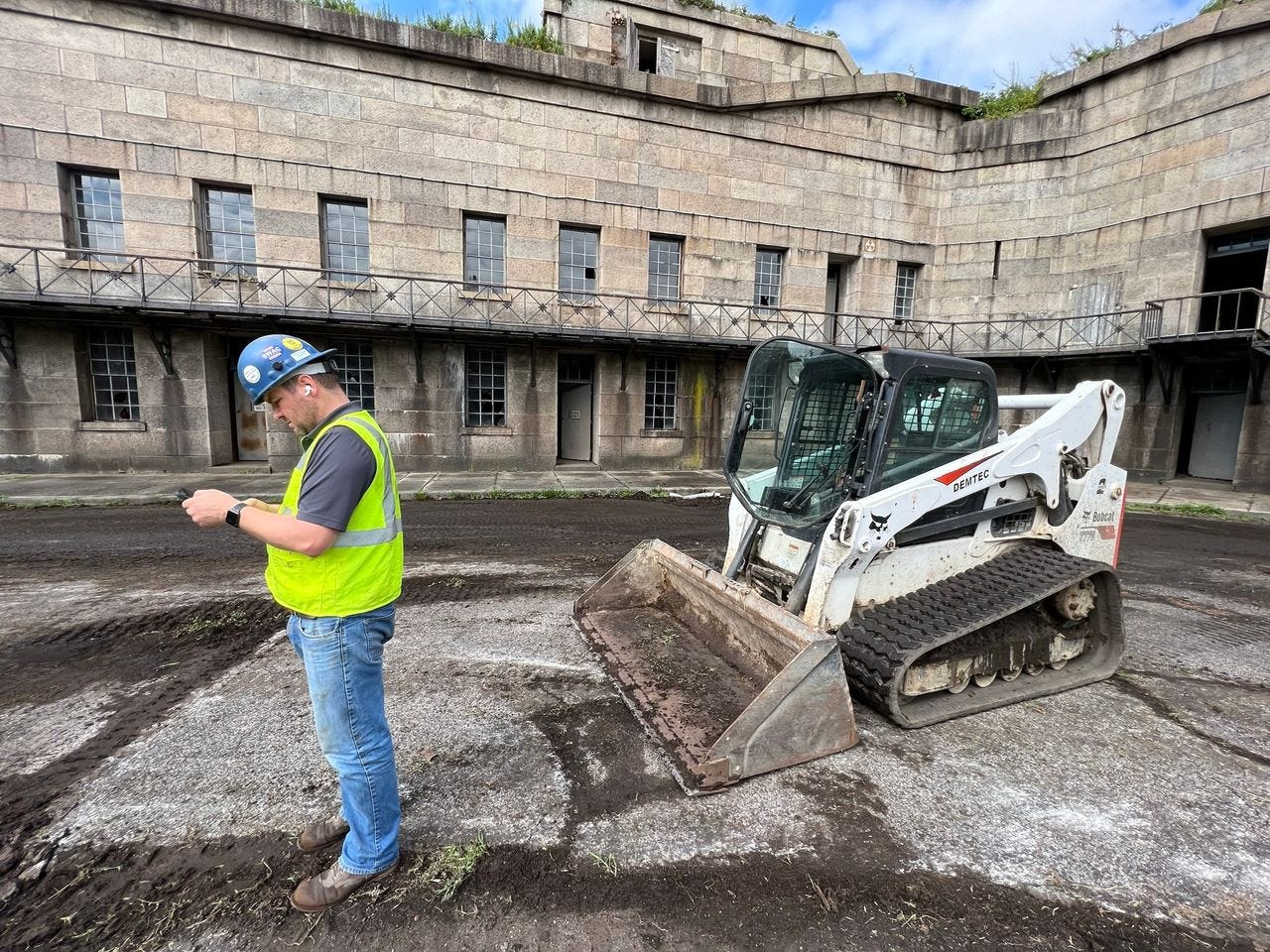
For James Costello, demolition has always been about understanding how things come together before taking them apart. Trained as a structural engineer, he now oversees large, complex demolition projects for a major New York contractor. “I went to school for structural engineering,” James says. “I don’t know how I ended up here, but it’s the funner part of structural work.”
On top of his day job, James also runs DEMTEC, his own multimillion-dollar demolition business. The company takes on everything from gutting a million-square-foot former manufacturing facility to sending remote-controlled demolition robots into buildings to break up concrete.
But the demolition itself is only part of the job. Largely on his own, James also estimates bids, reviews contracts, prepares compliance paperwork, buys equipment, negotiates with clients, coordinates subcontractors, and keeps projects moving. His workweeks can stretch to 100 hours, leaving little time for the jobsite work he enjoys, or sometimes even for his family.
“My guys ask, ‘Are you coming to the job?’ I say, ‘Yeah, today, tomorrow, the next day.’ And I never make it there because I’m doing paperwork.” ChatGPT gives James a way to claw back some of that time.
Here are five ways he uses ChatGPT to take on administrative work and turn 15 years of experience into knowledge his team can use:
1. Prepare for a demolition bid
I am a demolition contractor and want to bid the demolition scope (demolition and disposal) for this project. Can you summarize what’s required and approximate quantities of debris?
Please calculate quantities of concrete, pavers, and stone separately. Assume the larger thicknesses and 6" thickness for the existing concrete slabs. Then add 30% for fluff. Please report totals only.
[ArchitecturalPlan.pdf] [CivilRemovalsPlan.pdf]
Why was this chat valuable? “Many of these projects wouldn’t be bid due to time constraints, but ChatGPT is multiplying what I can handle as a business owner in one day.”
2. Generate building-department compliance documents
Please create the following documents:
a worker orientation and sign-off sheeta pre-shift safety plan (aka Job Hazard Analysis)a weekly toolbox talk on a relevant construction topic, such as working safely around equipmentan NYC dust and noise mitigation plan
Dust will be mitigated with a 2" hose connected to the fire hydrant (for which we have a DEP permit to use) and noise will be mitigated by the construction fence.
[DemolitionPlans.pdf] [InspectionLog.pdf]
Why was this chat valuable? “New York City’s building department requires a million things. It’s the same thing three or four times, but there’s a little difference in each piece of paper. ChatGPT did it in about a minute. That’s a huge time-saver.”
3. Clarify plans for subcontractors using a diagram
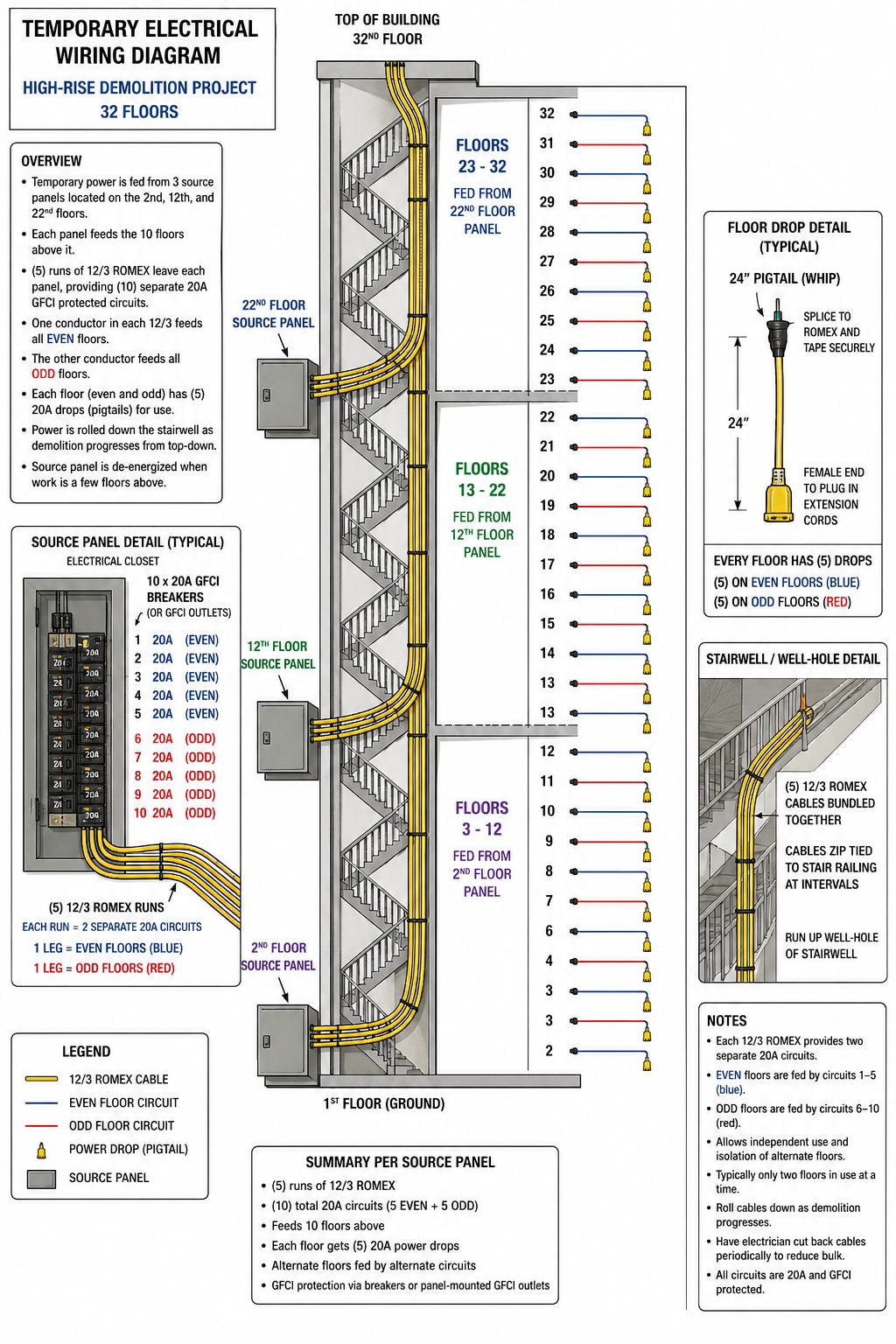
I need a visual diagram for temporary electrical wiring for a 32-floor high-rise office building demolition project. I’ll share more details about the electrical specifications in a moment, but here’s the idea:
We anticipate only using two floors of power at a timeBecause the building will be demolished from the top down, we will roll down the cables one floor at a time as demolition progressesThe power source should remain far enough below the work so that water from dust control will not make its way to the electrical closets with the source panelsEvery so often, we will have the electrician cut off a section to reduce the bulk
Why was this chat valuable? “As a demolition contractor in NYC, we act as the general contractor for the site. We’re taking down a few high-rise buildings on Park Avenue this year and my electrician didn’t understand how I wanted the temporary power to run up the stairs. This diagram shows exactly what I wanted him to install, and he now understands. For future projects, I no longer need to go through this for hours with each trade. I can’t wait to make versions for my plumbers and other subcontractor scopes too.”
4. Create visual training aids for specialized equipment
I want to create a visual work plan for a demolition robot operator to follow at the jobsite. Here’s a picture of the site and my notes on what they need to do.
Can you visualize this into 4 steps?
1) chop strip (5' wide x 2' high at elevation 5'-7' from grade)
2) fold top section of wall down
3) chop top section of wall while folded
4) chop base of wall down to slab on grade
[Site.jpg] [Notes.doc]
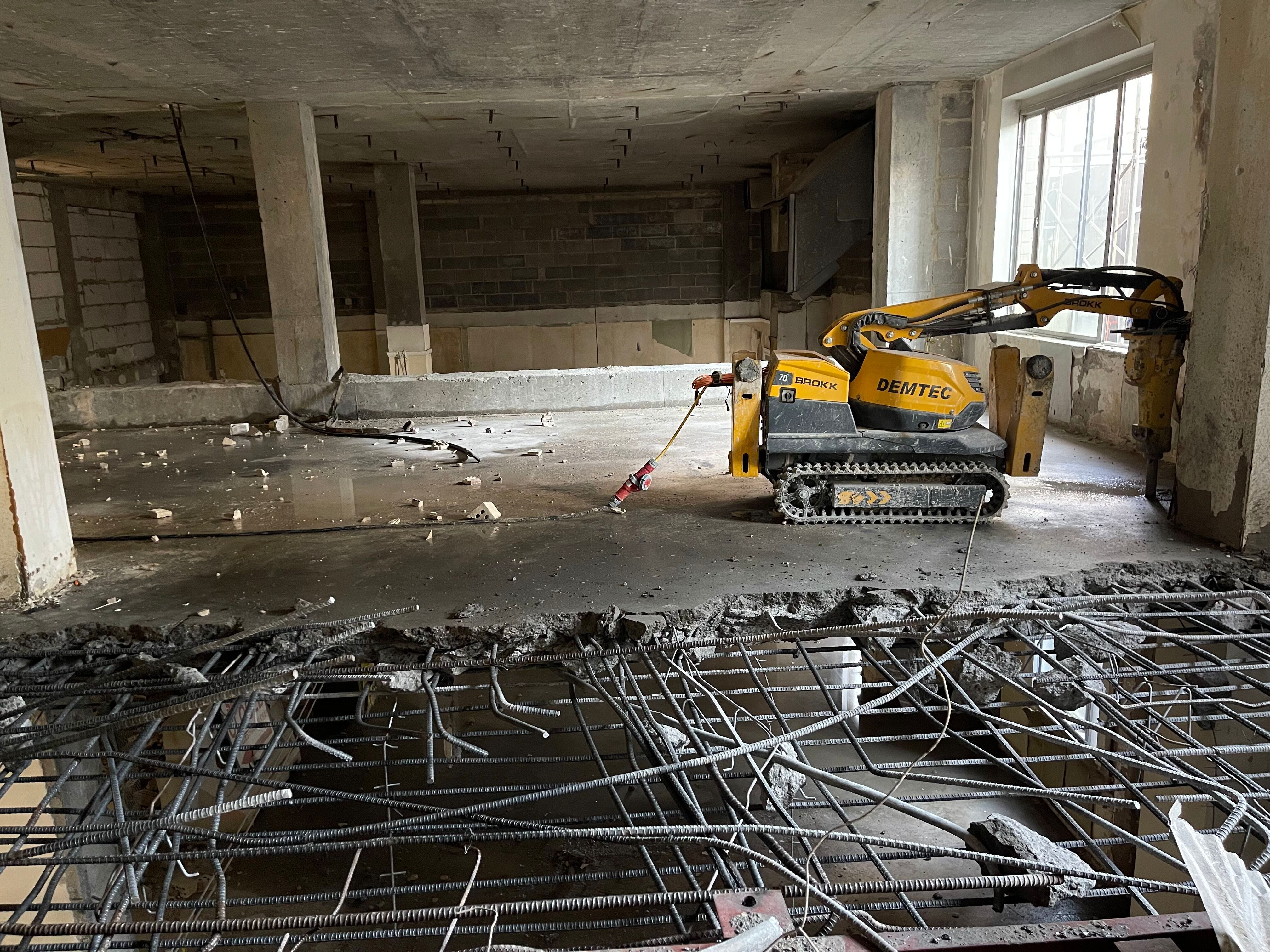
Why was this chat valuable? “We also do demolition using robots. You see those bomb squad things that go through the door and grab something? We have those, but with jackhammers on them. Trying to explain to the guys how to use these robots is hard. They think they can drive it as an excavator. It’s a similar control, but it’s not the same. This is helping me explain how to switch from driving an excavator to driving a robot.”
5. Summarize job costs
I want to summarize my job costs for this project.
We were on-site Monday-Thursday from 4/20 to 5/8. We took a break, and then resumed work Monday-Friday from 6/8 thru today.
Using the attached payroll, per diem, credit card transactions, and sample job-cost files, build an Excel spreadsheet that I can update, plus a PDF cost summary for my review.
Include wages, payroll taxes, workers’ comp, benefits, per diem, and general liability insurance at 14.48% of gross wages, excluding per diemTreat all payroll and credit card transactions as project costs for now. I’ll remove anything unrelatedFlag the additional costs I may need to add, including equipment loans, container-loading labor, shipping, and any additional bills I didn’t pay with a credit card
Keep detailed labor calculations separate and show simple weekly labor totals on the main cost sheet so I can update it as the project continues.
[Payroll.csv] [PayStub.jpg] [CreditCard.csv] [JobCosts.csv]
Why was this chat valuable? “When many projects are ongoing simultaneously with the same vendors and suppliers, job cost tracking often falls behind or just stops in order to handle the higher-priority tasks required for each project. ChatGPT lets me drop in the raw data for analysis, and I only need to answer a few questions to reconcile three or four months of cost data across all of my projects. Then I have it run a comparison against the original estimates to check for inaccuracies and deviations.”
For more stories and use cases from experts using ChatGPT, subscribe.
Are you a Pro subscriber using ChatGPT to help you level up your work? We’d love to meet you.