
A doctor, an economist, and a comedian share their chats
A dispatch from experts using ChatGPT in their work and life
Every week, we get on the phone with ChatGPT Pro subscribers to learn how they’re actually using the product, because they tend to push the edges of what’s possible. Today, we give you 10 ChatGPT use cases from two physician-scientists, an economist, a comedian, and other experts. We hope these spark ideas for how you can use AI in your field.
Have exceptional chats that we should feature in this newsletter? Tell us about yourself.

1. Identify potential drug candidates
Please assess and validate the following ~50 potential treatments for POEMS syndrome. For each treatment, let me know the biological rationale for why it may work and why it may not. Then re-rank them based on existing evidence.

[Treatments.csv]
— David Fajgenbaum, MD, MBA, MSc, physician-scientist
2. Critique economics paper
Attached is a famous 1978 macroeconomics paper by Robert J. Barro on unanticipated money shocks and their effects. Please write a detailed critique of it, bringing all the economic and econometric expertise you can bring to bear on the matter.

[Paper.PDF]
— Tyler Cowen, PhD, economist
3. Analyze approaches for disease phenotyping
You are an experienced clinical-NLP researcher and LLM expert, specializing in EHR-based phenotyping and temporal reasoning in obstetrics.

Summarize and critically analyze the most promising, high-performing approaches for disease phenotyping using EHR data — especially methods that identify time of diagnosis (onset) rather than just presence/absence — focusing on hypertensive disorders of pregnancy (particularly preeclampsia).
— Vesela Kovacheva, MD, PhD, physician-scientist
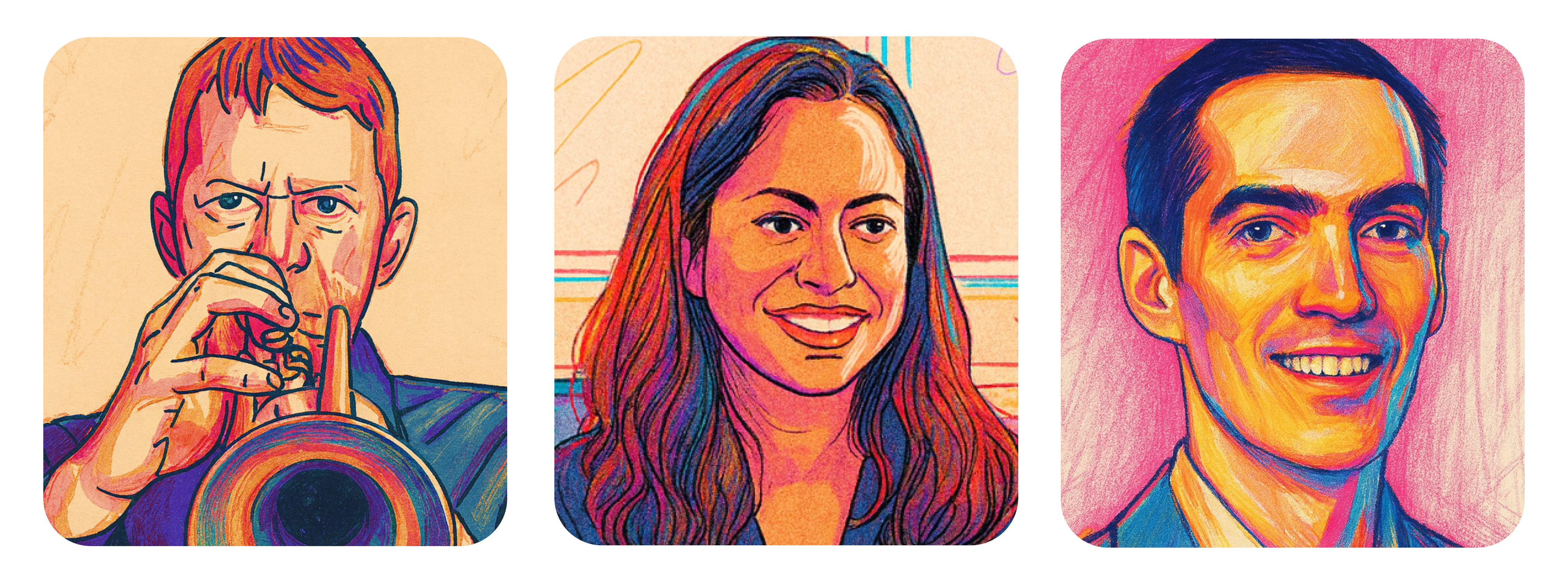
4. Learn about MEL spectrograms
Explain why MEL spectrograms outperform raw audio chunking when training a variational autoencoder (VAE) on my 500+ audio tracks. Include detailed reasoning, relevant research, and optimized open-source code for generative audio models trained directly from raw waveforms.
— Michael Wall, music composer
5. Analyze a large dataset
I am looking for genes that may cause urogenital disorders. I need help studying a large proteomic dataset on patient urine. Based on the attached file, do any of these cases have urine proteomic values that seem unique or drastically different from the others? If so, what is different about them?

[Dataset.csv]
— Catherine Brownstein, MPH, PhD, medical researcher and professor
6. Create lyrics to teach marketing concepts
Please create lyrics of a rap song in 90s-style Nas. Make it very good, but make the lyrics very, very specific to CBCV—nothing generic. This isn’t about data-driven insights. We want specific references to breaking things down by cohort, understanding corporate valuation, diagnostic insights from a behavioral and decompositional approach, avoiding shortcuts based on top-line revenue, and analyzing acquisition, retention, ordering, and spend. Show how this improves understanding of corporate value and highlights the value of marketing.
— Dan McCarthy, PhD, statistician and marketing professor

7. Brainstorm next generation treatments
You are a world-leading expert in HIV, immunology, and therapeutic development. Your goal is to map out 10 clear paths that, if pursued rigorously, could finally solve the HIV cure/vaccine challenge.

Develop and describe 10 distinct, high-impact approaches ranging from novel immunogens and delivery platforms to cell- and gene-based therapies that could realistically lead to either a functional cure or an effective vaccine.

For each approach, include:
- A concise name or concept title
- Underlying biological rationale
- Key technological or methodological innovation
- Anticipated mechanism of action
- Major technical or safety challenges and how to address them
- A rough timeline or next-step experiment to validate feasibility

Be bold, interdisciplinary, and specific.
— Derya Unutmaz, MD, medical researcher and professor
8. Practice language
I’m learning Latin again. I studied it for five years and used to be good enough to translate the Aeneid. I’m getting back into it and want you to help me brush up.

I’ll give you a passage I’m translating and my attempt. Ask me questions and nudge me in the right direction—don’t just give me your exact translation. If I’m missing a word definition, decide when the right time is to fill me in.

Quo usque tandem abutere, Catilina, patientia nostra?

My attempt: “For how long, Catiline, will you abuse my patience?”
— Alexis Gauba, entrepreneur
9. Scan news headlines for monologue jokes
What stories from the past couple of months might be good for monologue jokes? Fun, strange, attention-grabbing science headlines? Which monologue jokes will still be relevant in six months? What scientific trends have future persistence?
— Sarah Rose Siskind, science comedy writer
10. Review patent application
I’m applying for this patent. What are the chances the patent office approves it in the United States?

[Application.pdf]
— Matt Messinger, entrepreneur
For more stories and use cases from experts using ChatGPT, subscribe.
Are you a Pro subscriber using ChatGPT to help you level up your work? We’d love to meet you.
I've been using it in a few different ways that I see listed above. I've been using it as a tutor for Japanese, so that's super helpful from a language perspective. I'm also interested in economics and have been doing similar to the economist above. We're in what feels like super weird and historically unprecedented times, but really we're only used to what we've experienced in our lifetimes. Using chatgpt to draw historical parallels to current events has been helpful for identifying similar experiences and how people have successfully weathered them.